August 2026
The permit is gone, the rules now cover the whole highway, and the detour is two hours — not ten minutes.
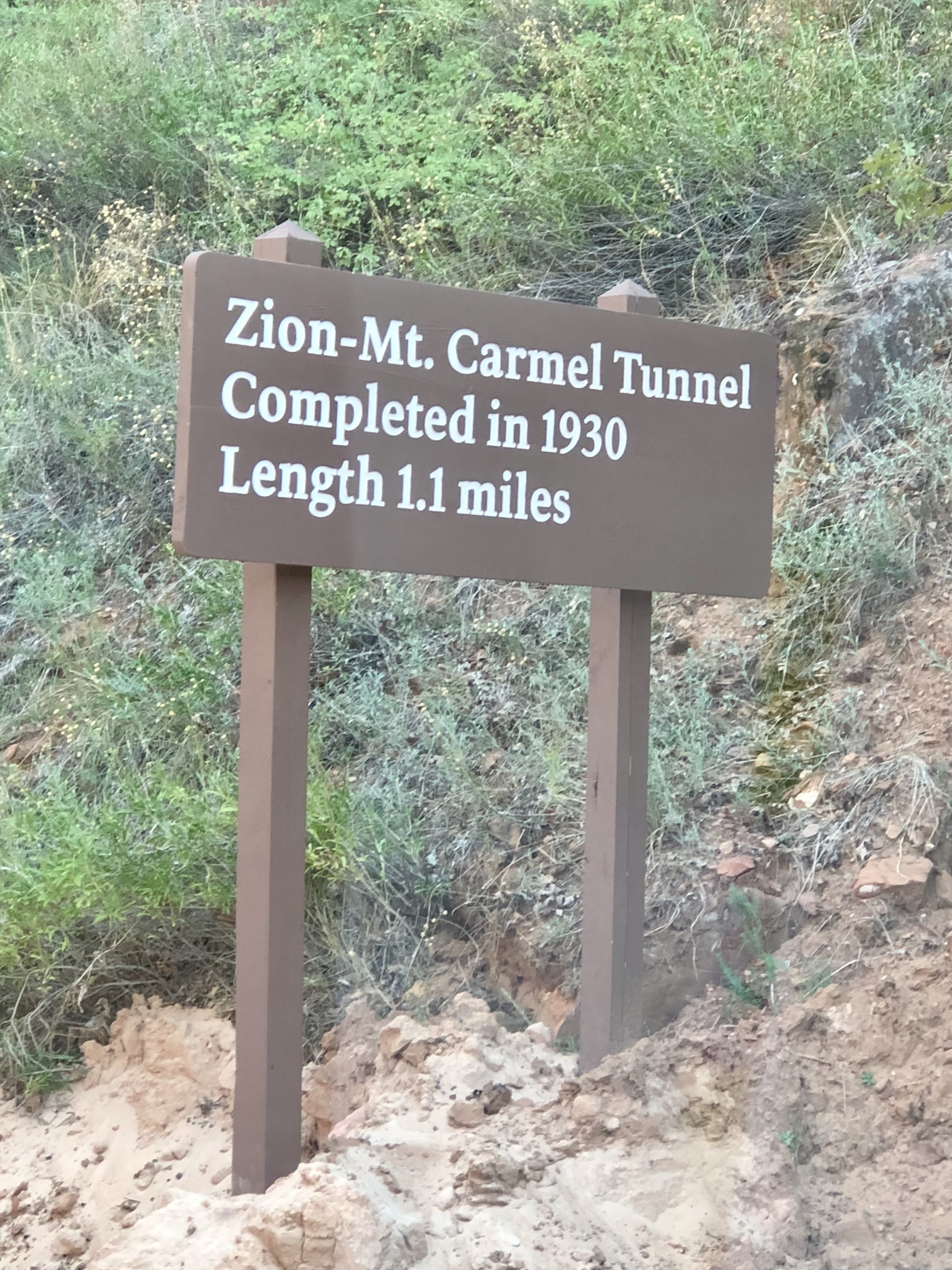
Can my RV go through the Zion-Mt. Carmel Tunnel?
Short answer: probably not. As of June 7, 2026, no vehicle over 11’4″ tall, 7’10” wide, 35’9″ long, or 50,000 lbs may drive the Zion–Mt. Carmel Highway between Canyon Junction and the East Entrance. Truck-and-trailer combinations are also capped at 50′ overall and 26′ from hitch to rear axle. The oversized-vehicle escort permit no longer exists. There is no exception, no workaround, and no talking your way past the kiosk.
The numbers
| All must be true: | Must be less than: | |
| Length — single vehicle | 35ft 9in (10.90 m) | Includes bike racks, winch, spare tire, and anything mounted to your rig |
| Length — combined truck & trailer or RV & tow | 50ft 0in (15.24 m) overall | Total bumper to hitch to bumper |
| Trailer | 26ft 0in (7.92 m) hitch to rear axle | For a fifth wheel, this is the distance from the kingpin to rear axle |
| Width | 7ft 10in (2.39 m) | Don’t forget to include the mirrors. If you have a Class A, C, even a dually, it probably will NOT fit. |
| Height | 11ft 4in (3.45 m) | Be sure to include your rooftop A/C in your measurements, especially if it’s not in the center of your roof. |
| Weight | 50,000 lbs (22,680 kg) |
Exceed any one of these and you’re rerouted. All three length numbers apply to a truck-and-trailer setup, and all three have to pass.
Measurements include mirrors, tires, and anything bolted on after you bought the thing: A/C, bike rack, satellite dish, ladder, cargo box, waste tote tank.
A dually is 8 feet wide at the fenders and closer to 9 feet at the mirrors. It does not fit. Class A and Class C motorhomes run 8’ to 8’6″ wide before mirrors. They do not fit. Some Class B vans will fit — a ProMaster is too wide but a Sprinter is roughly 7’9″ mirror to mirror — however that’s only a one-inch margin. And if you added flares to extend your sleeping area, then you will not fit. So measure yours instead of trusting the specs.
If you’re not sure you’ll fit, you don’t. Rock is very unforgiving,
This is a highway restriction, not a tunnel restriction
Everyone calls it the tunnel rule. It isn’t. The restriction covers the entire 10.7-mile stretch of SR-9 between Canyon Junction and the East Entrance to the park — the switchbacks, the bridges, the tunnel, and the whole east side of the park.
Three consequences people keep getting wrong:
Coming in from the south, an oversized rig can enter through the South Entrance and park at the Visitor Center if there’s space, but it cannot drive past Canyon Junction. That includes the switchbacks up to Canyon Overlook Trail.
A campground or Zion Lodge reservation does not exempt you. Reservation holders in oversized vehicles still can’t go past Canyon Junction and still can’t enter through the East Entrance at all.
You will be turned around at the gate, not at the tunnel, which is 5 miles to the east of the tunnel entrance.
What changed, and when
June 7, 2026. Before that date, rigs between 11’4″ and 13’1″ tall could buy an escort permit — about fifteen dollars — and rangers would stop oncoming traffic so you could drive straight down the middle of the tunnel where the clearance is highest. That option is gone. Two-way traffic is now the default, and you may not cross the centerline. Ever.
The park points to safety studies from 1989 and 2019, validated by the Federal Highway Administration, plus the fact that the road is on the National Register of Historic Places and was built for 1930 traffic.
A few years ago, I drove a 32ft class C at 12ft 4in tall through the tunnel. I had to get the permit available at the time so I could drive down the middle since my RV would scrape the ceiling at the tunnel sides. It was a long white-knuckle drive – listening for the sound of my A/C smashing into rock that I feared would come any minute, looking out my side window and seeing the edges of the tunnel walls that seemed merely inches above my side mirrors, and wondering if I should have measured the height myself instead of trusting the manufacturer’s specs. All of this in a very dark, very unforgiving space that your headlights barely pierce the blackness in front on you.
What it costs you to go around
Two paved options. Neither is quick.
South, via Arizona. SR-9 west to Hurricane, SR-59 south, AZ-389 east, US-89 north to Mt. Carmel Junction. Roughly 80 miles between the South Entrance area and the East Entrance area, and 1.5 to 2+ hours depending on where exactly you start and stop. This is the one to take. It’s easy pavement, it opens up Kanab and the North Rim, and there’s fuel and food along it.
North, via I-15. I-15 north from the Hurricane/La Verkin area to SR-20, then US-89 south. Roughly 161 miles and 3 to 4 hours. Take this only if you’re headed that direction anyway.
For comparison, the drive you’re no longer allowed to make is about 13 miles.
Do not let your GPS pick the route. Many navigational apps will offer Sheep Bridge Road, which connects SR-59 to SR-9 in Virgin and looks like it saves you forty minutes. It’s dirt, it’s BLM, and it is explicitly not recommended for large vehicles. Same for Smithsonian Butte Road between Rockville and Apple Valley, and the Coral Pink Sand Dunes cutoff. If the road doesn’t have a state or federal route shield, I would not take an RV down it unless you are confident in your offroading skills, and your rig’s.
If you don’t fit: how to see Zion anyway
Park at the Virgin park-and-ride. The Zion Corridor Park & Ride opened in March 2026 at Zion White Bison Resort in Virgin, about 13 miles west of the South Entrance. Free to park, $5 for the shuttle, first-come, no reservations, with 8 oversized spaces sized for RVs and trailers. SunTran runs it Monday through Saturday, the White Bison shuttle covers Sundays and holidays. It’s about 25 minutes into Springdale where it drops you off close to the South Entrance. It’s an easy walk (about ½ mile) to the in-park shuttle at the Visitors Center, or you can take a short transfer on the free Springdale town shuttle. No overnight parking, and the lot is small enough to fill on a summer morning.
Park at the Visitor Center. There’s oversized parking inside the South Entrance if you get there early enough. Once you’re in, the canyon runs on the shuttle anyway — Riverside Walk, Emerald Pools, Angels Landing if you hold a permit. None of it needs your rig.
Drop the trailer. If your truck alone clears 7’10” at the mirrors, unhitch at camp and drive the highway solo. Measure with the tow mirrors in the position you’ll actually drive them – extended tow mirrors on a ¾ ton will fail this test on their own. So will a dually. Just keep in mind that during the summer shuttle season, NO vehicles are allowed on the Scenic Drive, so driving your truck or towed vehicle only gets you through the tunnel and on the east side. You still need to take the shuttle to see most of the park.
Hire the drive. Springdale and the east side have 4×4 Jeep tour operators, guided horseback outfits, and backcountry shuttle services that will do one-way trailhead drops. Or rent a car in Springdale or St. George for a day.
What you actually lose
The east side of the park is the part most visitors skip, and it’s now the part oversized rigs can’t reach: Canyon Overlook Trail, Checkerboard Mesa, the slickrock pullouts along the upper highway, and the switchback views on the descent. If East Zion was the reason you routed through here, that reason is gone. Rebuild the day around it rather than discovering it at the kiosk.
Private campgrounds on the east side — anything out toward Mt. Carmel Junction — are now effectively cut off from the visitor center for oversized rigs. You can stay there, but you can’t drive to the shuttle. It’s a two-hour round trip around the south. If you’re oversized, base on the Springdale side.
How to measure your own rig
Nobody knows their real numbers and most people guess low. The brochure number is not your number.
Height: ground to the tallest thing on the roof, on the tires you’re currently using, at cold pressure. If your A/C isn’t centered, measure to the A/C. If your truck has airbags, inflate them. Pull in the slides, hook it up, lift the levelers. Lay a board across the highest point and drop a tape measure to the ground.
Width: mirror tip to mirror tip, in the position you drive them. Not the body width. Not the fender width.
Single length: bumper to bumper, including the spare tire carrier, the ladder, and the hitch receiver.
Combined length: front bumper of the truck to rear bumper of the trailer, hitched.
Hitch to rear axle or Kingpin-to-Rear-Axle (KPRA): ball to the centerline of the rearmost trailer axle. This one is new to most people and it’s the one that catches long trailers with forward axle placement.
Weight: best way to measure the weight of your rig is to use a CAT scale available at most truck stops. Water weighs 8.35lb per gallon and you might have 1000lb of gear or more in your rig, so you cannot go by the spec sheet. My trailer had a dry weight of 5,885lb when it rolled off the lot, but with my 55gal water tank, extra lithium batteries, and all my gear – the CAT scale came back at 7545lb for the trailer and just over 15k pounds for the entire rig.
Tape measure, twenty minutes, level ground. Do it before you leave, not at the East Entrance kiosk with a line behind you. I bumper pull an Ember Overland 221msl trailer with a RAM 2500 complete with rooftop tent and a rack for my recovery boards, hi-lift jack, and shovel (Overall Height 11’0”, Trailer Width 8’2”, Truck Width 9’0”, Overall Length 48’, Hitch to rear axle 17’6”, Weight 15,000lb). I do not fit. Not only am I too wide, but 4 inches below the maximum height is too close for comfort. I go over a bump, my trailer pitches upwards, and suddenly I’ve scraped my A/C unit. Not only does my trailer not fit, but neither does my truck, so I cannot even leave the trailer in the campground and drive the truck through the tunnel. You are also not allowed to take a bike through the tunnel – not that I would anyway. Did I mention how DARK it is? There are no lights in the tunnel. None.
Dogs
Zion is one of the least dog-friendly parks in the system: leashed dogs on the Pa’rus Trail and in developed areas only, nowhere else, and not on the shuttle. If you’re rerouting to a park-and-ride and shuttling in, there is no version of that day that includes your dog. Plan to board in Springdale or Hurricane, or plan a different day. Personally, I have left my dog in my trailer in the campground and driven to the visitor’s center to take the shuttle, but this was for a very short hike and I was back in 3-4 hours. Plus I always set up a camera, indoor temperature alarm, and have someone watching my rig. Not my first choice, but unfortunately Zion is not the park for your fluffy friend. For longer days or hikes, I will board him, or take turns with an RV neighbor watching each others’ pets.
Tips
Fuel and groceries: Hurricane on the west side, Kanab on the east. Springdale prices are what you’d expect from a gateway town.
The southern detour has long gaps without services between Hurricane and Fredonia. Top off.
Springdale parking is a bloodsport in season; the shuttle from Virgin or St. George is usually the less stressful option.
The Zion–Mt. Carmel Highway also closes temporarily on peak days when the east-side lots fill, independent of any of this.
Rules verified against nps.gov/zion and the UDOT Zion Area road restrictions page on [DATE]. Park restrictions change; confirm before you tow.
Planning the full Southwest loop? Route 05 — The Big 5 Loop Road Book covers this and the other thirteen days. [LINK]
Tags: Desert, Utah, National Parks, RV Travel, Zion
Leave a Reply